The Quiet Discipline of Cooking Daily
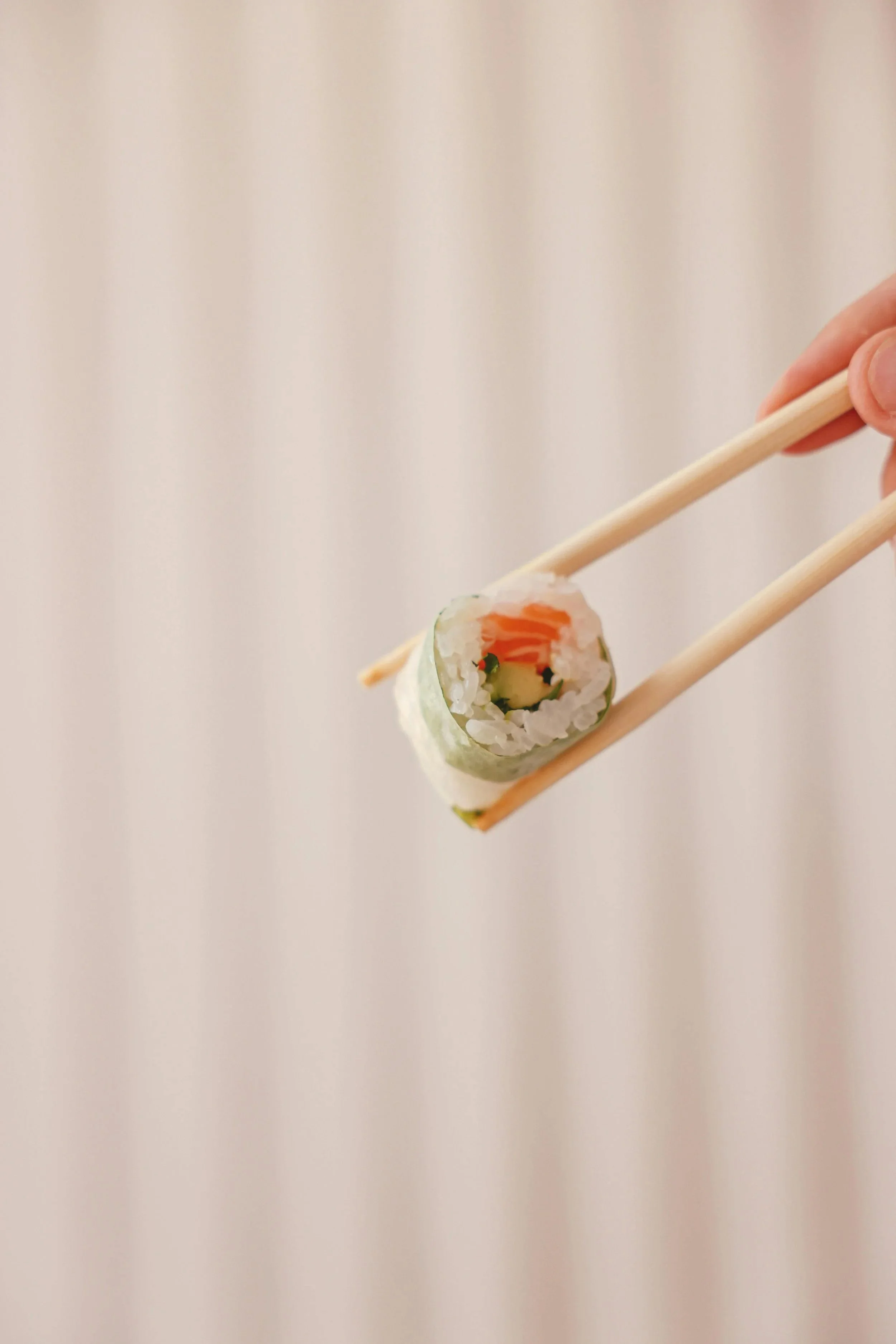
Consider the sushi master.
Decades spent doing the same thing — washing rice, pressing rice, perfecting rice — before a single piece of fish is ever placed in hand. It isn't glamorous. It doesn't trend. There's no finish line, no trophy, no moment where you've arrived. And yet, that repetition is the whole point. The discipline is the destination.
Most of us will never train for decades in a Tokyo kitchen. But every evening, the same invitation appears: there are people who need to eat, a refrigerator to open, a decision to make. What we do with that small, daily moment turns out to matter more than we think.
“The quiet disciplines are the ones that shape us most — not because they’re heroic, but because they’re ours.”
The discipline nobody watches
Cooking daily isn't performed for applause. You cook because someone needs to eat. Because you decided, at some point, that the person who feeds your household deserves care — and that person might be you, or the people you love, or both. Deciding what we'll have tonight and then making it happen, with whatever's in the fridge, is a small but genuine exercise of agency.
This is where it begins to expand. The same quality that keeps you at the stove when you'd rather be anywhere else — call it follow-through, or integrity with small promises — shows up everywhere else you need it. In the work left unfinished at 4pm. In the difficult conversation you keep postponing. In the habit you're trying to build. Daily cooking is a training ground for showing up when no one is watching and nothing is spectacular.
What repetition quietly teaches
Not in the dramatic way of a cooking class or a new recipe. More like: after two hundred batches of rice, you notice exactly when to lower the flame. You learn that onions forgive you if you walk away for a moment. You develop a feel for salt that no measurement can teach. The kitchen becomes a place where competence accumulates invisibly, without anyone certifying it.
This kind of knowledge — embodied, earned through repetition — is increasingly rare. We live in an era that prizes shortcuts and scalable insights. But some things can only be learned by doing them, again and again, until they live in the hands rather than the head. The sushi master knows this. So does anyone who has made soup every week for a decade.
That slow accumulation of competence is transferable. The patience you develop waiting for bread to proof is the same patience you bring to a project that won't resolve quickly. The improvisational calm of cooking with whatever's on hand is exactly the disposition needed for most of adult life.
A gentle claim on the present
Cooking resists multitasking in a way few things do. The garlic will burn if you're not there. The bread needs you now. There's a quality of attention it demands — not intense concentration, but a gentle presence — that turns out to be a kind of rest from the ambient noise of everything else.
That capacity for presence — practiced nightly at the stove — begins to bleed into other hours. The meeting you attend more fully. The conversation where you actually listen. The problem you sit with long enough to understand. The daily kitchen becomes, quietly, a laboratory for being where you are.
The meal ends when the kitchen is clean
There is something professional kitchens understand that home cooks often resist: cooking and cleaning are not two separate acts. They are one continuous movement. The French call it mise en place — everything in its place — and it applies not just to the chopped onion and measured spice before cooking begins, but to the restored counter and washed pan after the last bite is taken. The clean kitchen is part of the dish.
To cook daily is, almost by necessity, to clean daily. The mess doesn't wait. A kitchen left to itself overnight compounds — oil hardens, smells settle, the space contracts. There is an honesty to this that few other rooms share. The kitchen shows you, without sentiment, what happens when you skip maintenance. And in that way it teaches something the rest of the house cannot: that restoration is not optional, it is structural.
“You’re not just cleaning. You’re preparing the space for your future self.”
The closing ritual matters. The meal ends not when the last bite is taken but when the kitchen is restored — surfaces wiped, pans dried, the sink empty again. There is a psychological completeness to this that is hard to explain until you've felt it. You go to bed having finished something. The loop is closed. And in the morning, the clean counter is a kind of gift from the person you were the night before — an act of care aimed at tomorrow.
This, too, expands outward. The discipline of the closing ritual — of not leaving things half-done, of returning spaces to their original state — is one of the quieter forms of respect: for the people you share a home with, for the work itself, and for your own future capacity to begin again.
Care made physical
Whatever else is going wrong — whatever is unfinished or uncertain or overwhelming — you can still make soup. You can still set the table. You can still wash the pot and wipe the counter and turn off the light. The meal happens, and the kitchen is restored, and that is something. Not everything, but something real.
The sushi roll in the photograph took years to perfect. That's the honest truth of any craft: the time is long, the rewards are quiet, and the practice rarely looks impressive from the outside. But look closely at the rice. At the precision of the roll, the freshness of the fish, the way it holds together without force. Behind that image is not just a cook — it's someone who has cleaned the same counter ten thousand times, who has prepared and restored the same space, daily, until the ritual became the foundation everything else was built on.
Begin wherever you are. The stove is already there. So is the sponge. That's enough.
It feels repetitive. A small obligation that returns at the same time, asking the same question: what are you going to make today? There’s no novelty in it. No sense of occasion. Just the steady requirement to begin again.
At that scale, it doesn’t seem like it would amount to much.
Most days are unremarkable.
You make something simple. You use what’s available. You repeat what you already know how to do. There’s no breakthrough, no clear improvement, nothing that signals progress in the way we expect it to.
But something is happening.
Over time, the repetition begins to take shape.
Not in the food itself, at least not at first, but in how you move through it. You reach for things without thinking. You know what works together. You adjust without needing to measure or check. The process becomes quieter, more contained.
Less effort, but more intention.
It also changes how you pay attention.
You start to notice small things — how something cooks, how long it actually takes, what happens when you leave it alone versus when you interfere. The difference between something that’s finished and something that’s just done.
These aren’t things you learn all at once.
They accumulate.
There’s a kind of steadiness that comes from doing something daily that doesn’t depend on how you feel about it.
Some days you want to cook. Most days, you don’t think much about it either way. You just do it. The decision has already been made.
That’s where the discipline is.
Not in effort, but in continuity.
What results isn’t dramatic.
The meals are still simple. The process still looks ordinary from the outside. But there’s a difference in how it holds together. Fewer adjustments. Fewer interruptions. Less friction between what you intend and what actually happens.
It begins to feel complete.
Cooking daily doesn’t change everything.
But it changes the baseline.
What once required attention becomes part of how you move. What once felt optional becomes assumed. The act itself stops feeling like a task and starts to feel like structure.
You don’t notice it happening.
Not at first.
But over time, it becomes something you rely on.