French Strawberry Jam — Developing Intensity
My grandmother's birthday was last Thursday.
And though she’s been gone for some years now, I still bake for her. Last year my son and I made a peach cobbler together, the one she taught me in her kitchen when I was a little girl, which I'm sure her own mother taught her once. This year I made a heart-shaped cake nakedly dusted with monkfruit and filled with a French strawberry jam adapted from Christine Ferber's Mes Confitures. The jam took three days, came out vivid and ruby red, and made the kitchen smell like berries and sugar and missing someone you love. Getting it right felt like the least I could do.
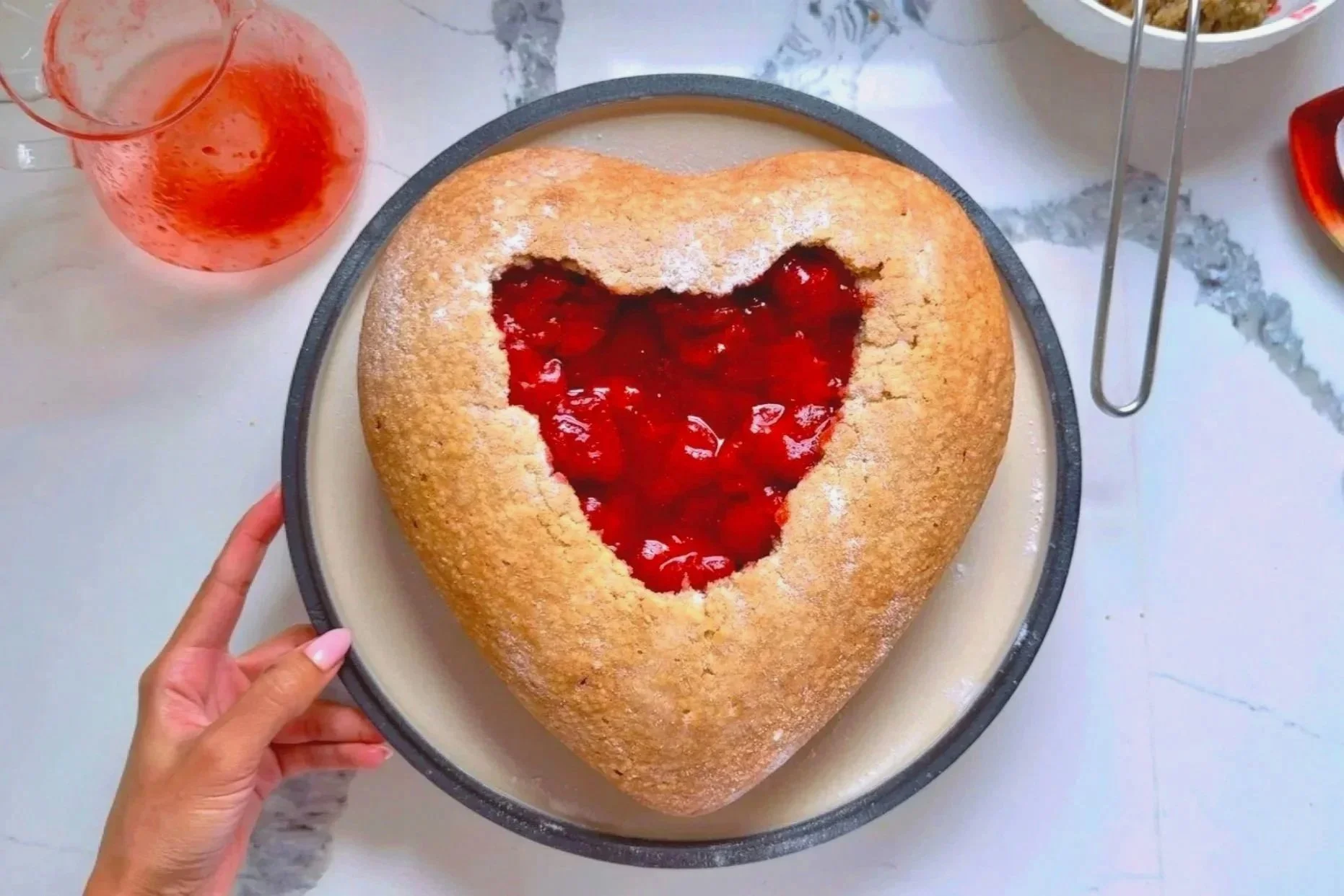
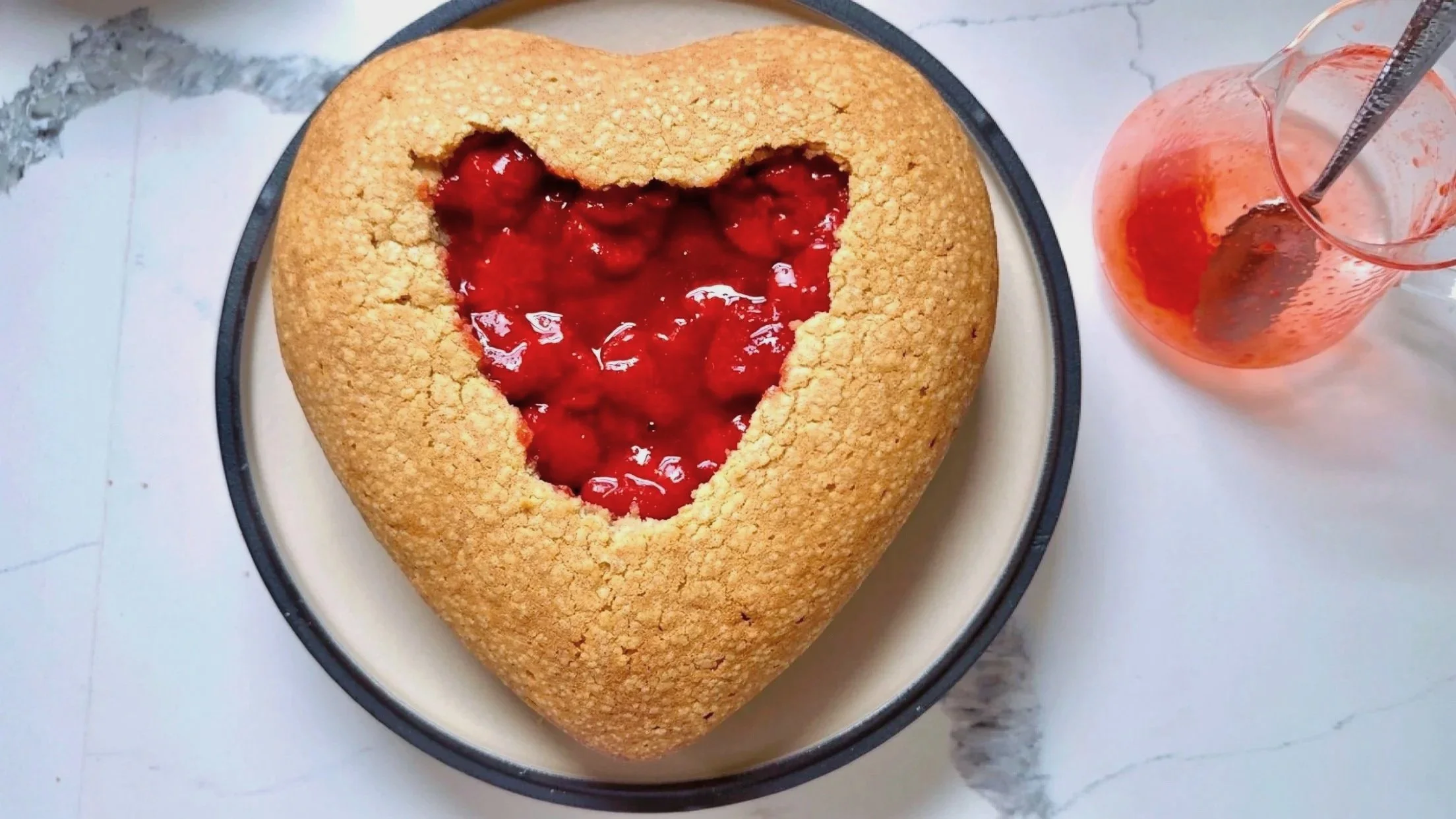
Golden pound cake, heart-shaped, filled with bright red strawberry jam and dusted with monkfruit.
Why French Jam Tastes Different
If you've ever tasted a proper French confiture and wondered why it hits differently than the average grocery store jar, the answer is almost always maceration — and restraint with sugar.
On Maceration
Christine Ferber, the jam-maker from Alsace often called the “queen of jams” or the “jam fairy,” built her reputation on a deceptively simple philosophy: use exceptional fruit, use less sugar than industrial recipes demand, and give time its role. Her strawberry jam calls for macerating the fruit overnight with sugar and lemon before any heat is applied. This step is everything. Maceration, in her world, is not optional. It is a non-negotiable act of respect toward the ingredient and an acknowledgment that the fruit has something to offer before the stove is ever involved.
At its core, maceration is an argument for slowness. When raw strawberries sit with sugar overnight, osmosis does quiet, extraordinary work. The sugar draws out the fruit's own liquid, the berries shrink and soften, the flavors tighten and deepen. By the time you bring everything to a boil, you are not cooking berries in sugar. You are finishing something that has already been transformed.
On Heat and Time
What makes Ferber's approach distinctive is the relationship between time and heat. The instinct with most jam is to cook it long enough to reach the set point — the temperature at which pectin forms a gel — and trust that flavor will follow. Ferber’s method front-loads the flavor development through overnight maceration (which does the concentration work before cooking), so by the time the jam hits the stove, the work is mostly done. A short, high-heat cook (sometimes in as little as five to eight minutes) sets the jam while the fruit's aromatic compounds are still intact. The result smells, and tastes, almost shockingly alive.
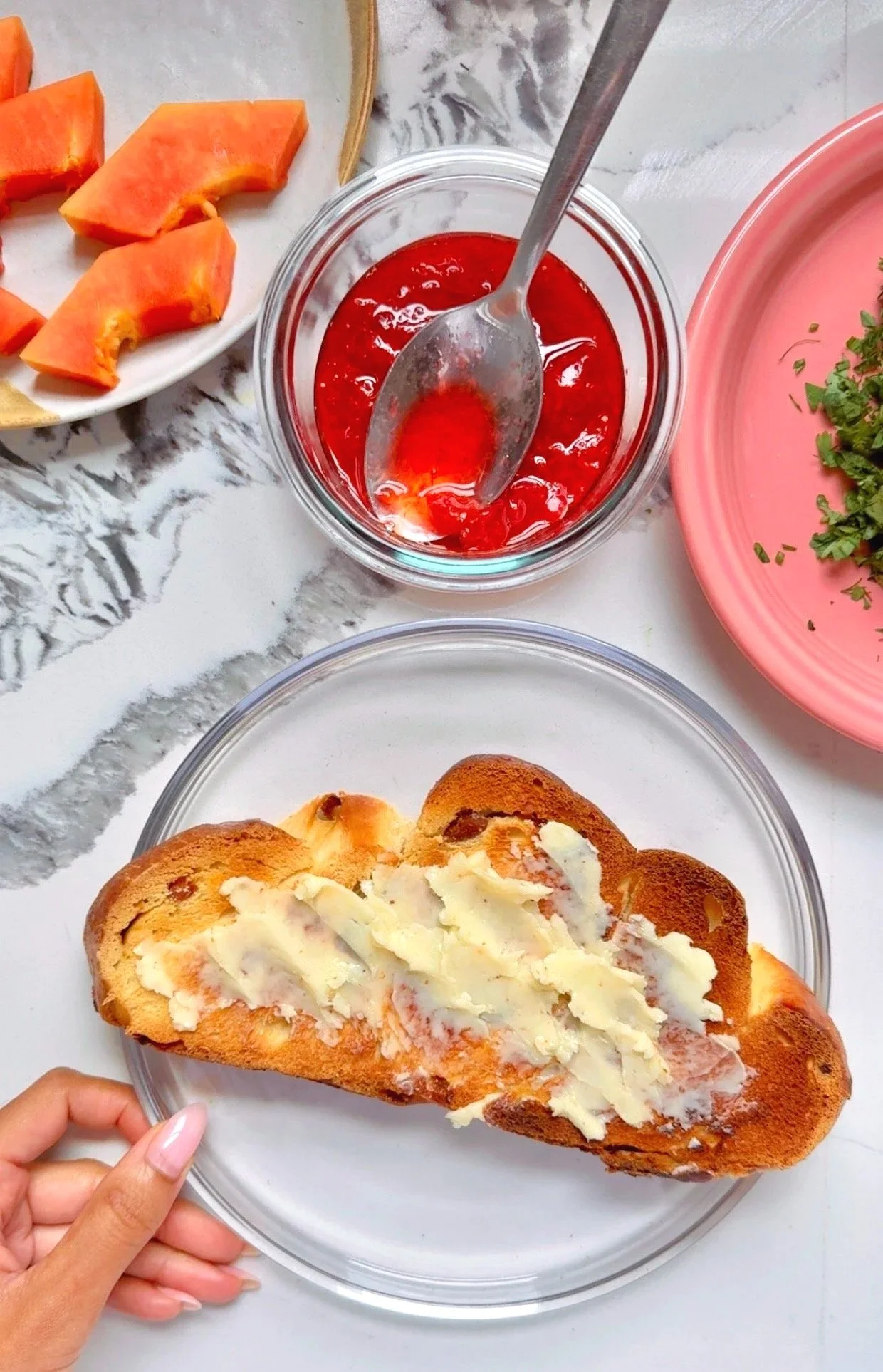
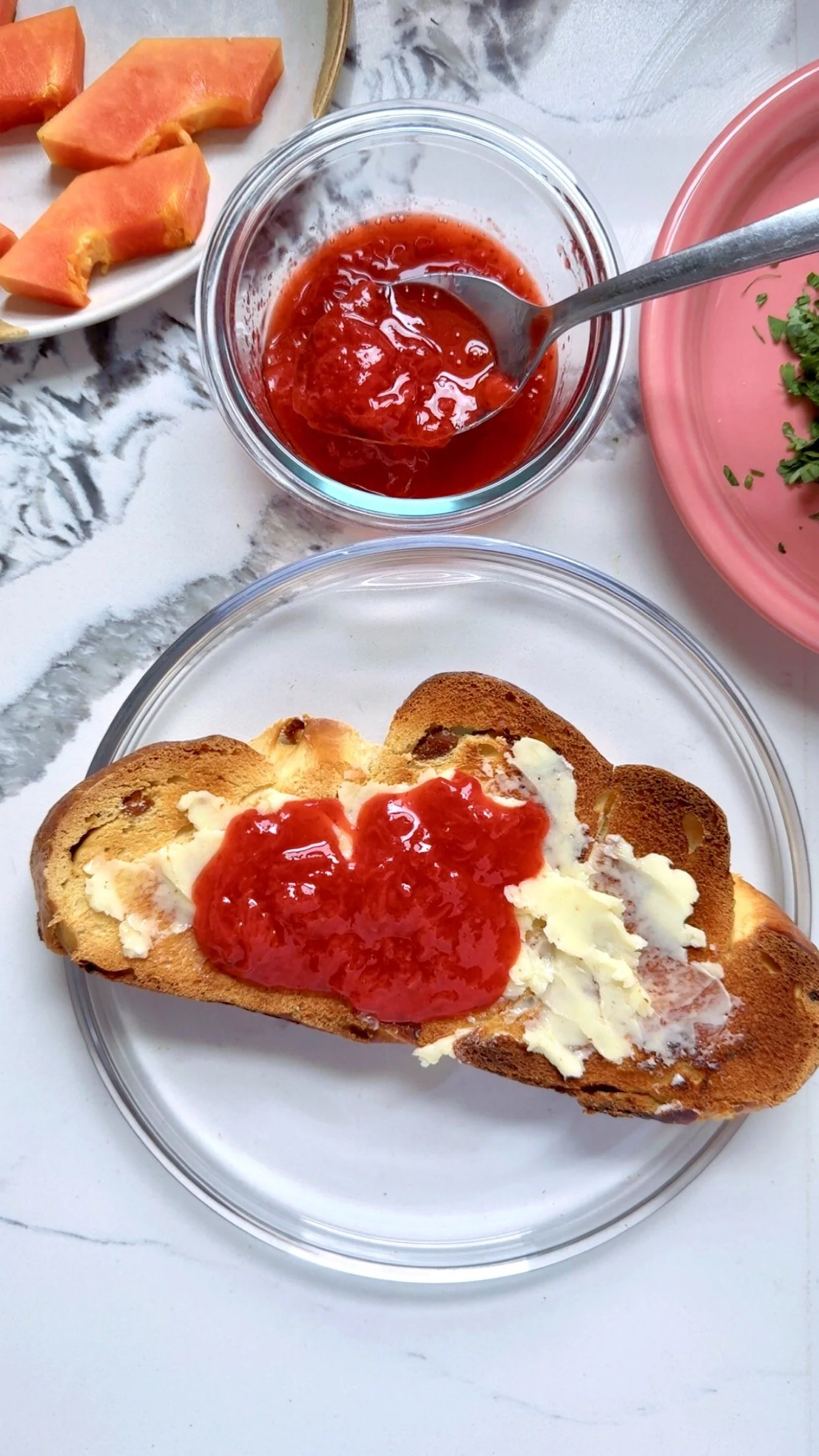
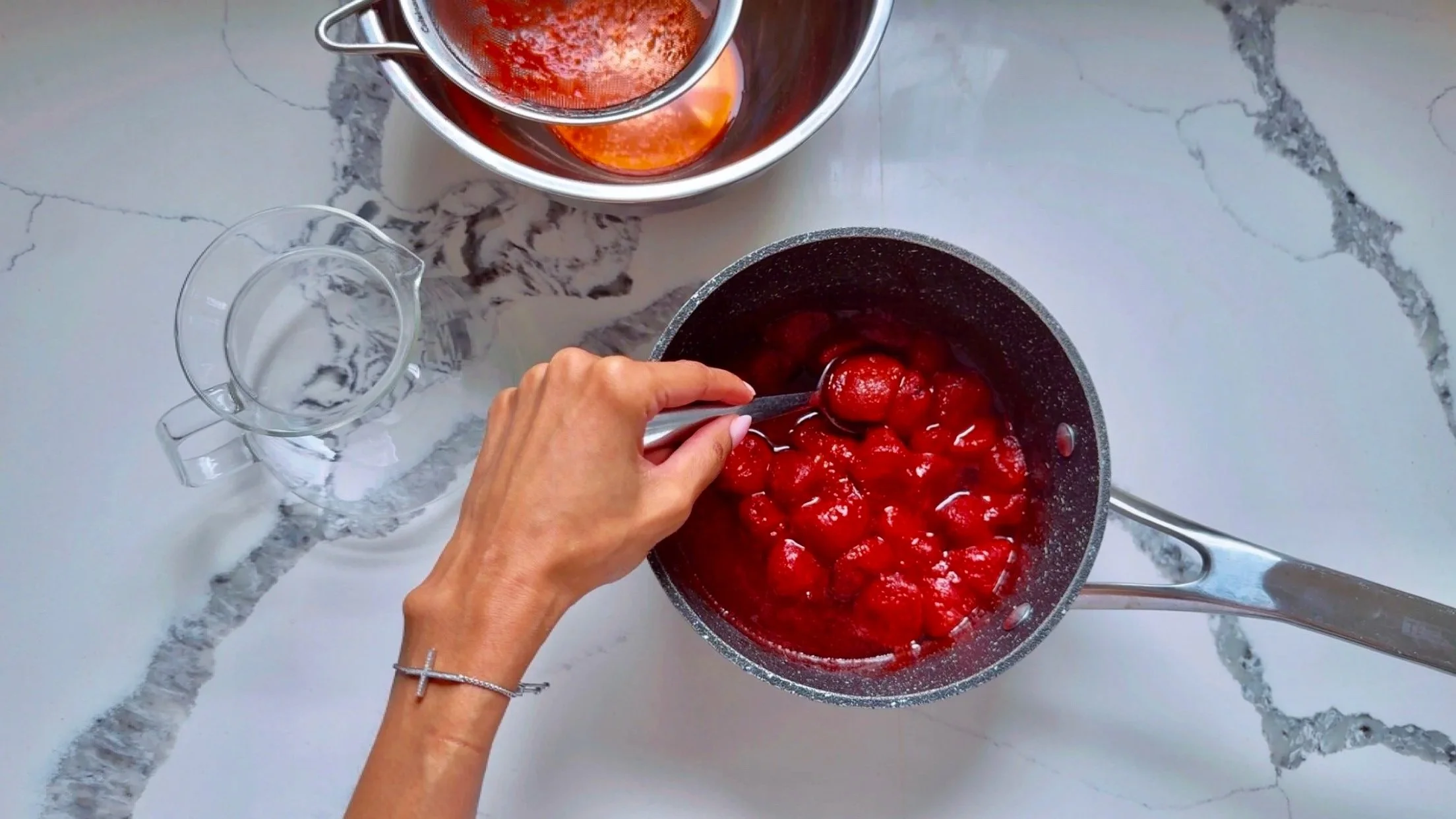
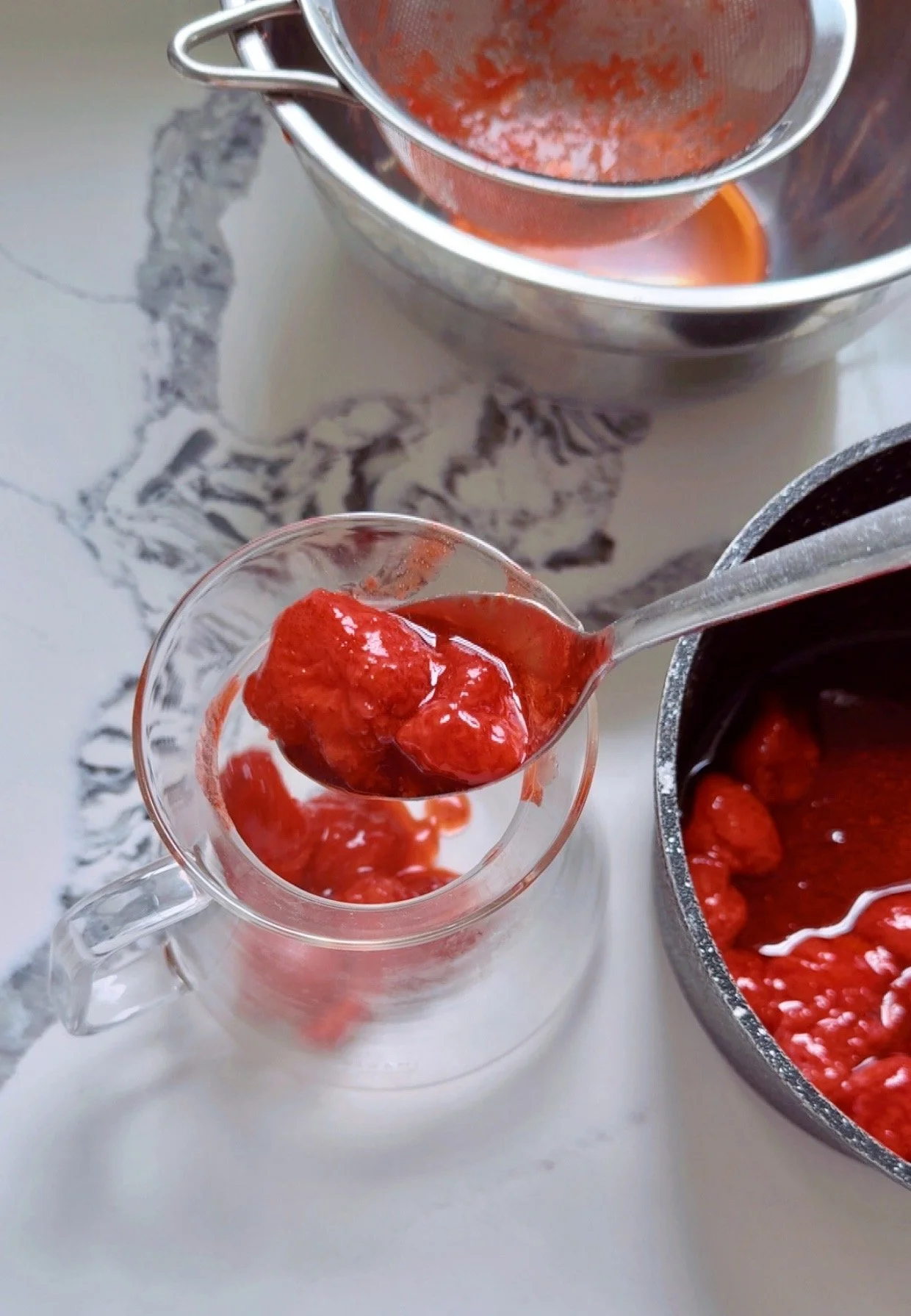
My adaptation, à la Fanny Zanotti à la Christine Ferber (see recipe card and link), takes this exercise in patience one step further. After the overnight maceration, the berries and all their juice come to a rolling boil for five to eight minutes, then go back into the fridge for a second night. This middle rest allows the fruit to continue absorbing the syrup, deepening in flavor and color before the final cook. On day three, the berries are strained from the syrup, the syrup is brought to the set point alone, and then the berries are added back in for a final five to eight minute boil together. The result is fruit fully intact and translucent, suspended in a syrup that has been concentrated over three days rather than rushed in one.
On Sugar Ratios
Traditional jam recipes often use a 1:1 ratio of fruit to sugar by weight. Ferber typically uses less, closer to 60–75% sugar relative to fruit. Less sugar means the fruit's flavor is not masked, but it also means you must be precise about the set point. Lower sugar jams are more vulnerable to spoilage, which makes proper sterilization essential.
For my jam, I went a step further and substituted monkfruit sweetener for cane sugar entirely. I used 1 cup of monkfruit to 1 pound of strawberries, which is a lower ratio than even Ferber's restrained hand. I wasn't sure what to expect, but the flavor held up completely. No sharpness, no artificial aftertaste, no meaningful difference in texture. The jam set on its own without pectin. Just monkfruit, lemon juice, and berries, and the fruit tasted like fruit. For anyone avoiding refined sugar when baking, it is worth knowing this swap works.
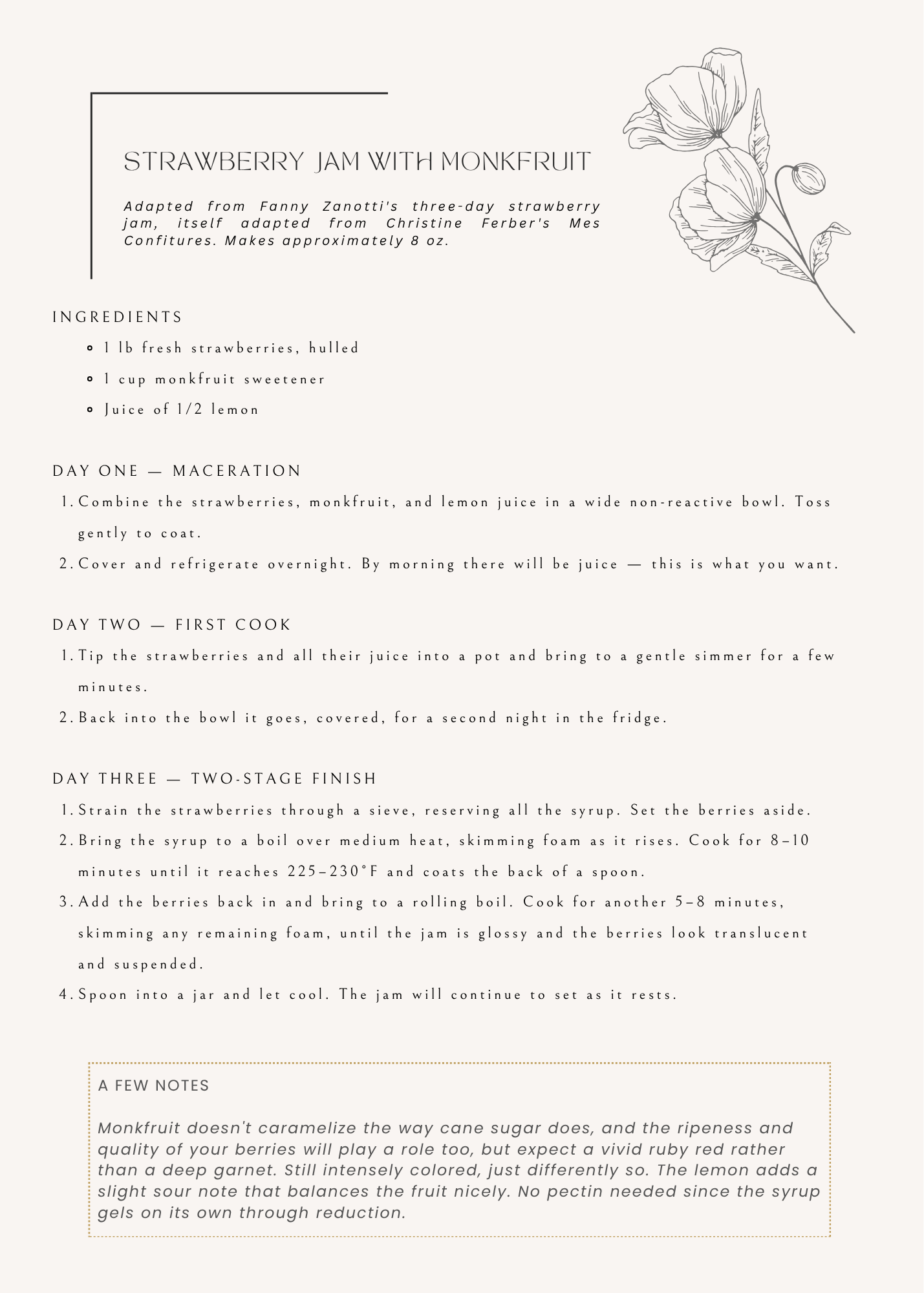
Note: if your monkfruit sweetener contains erythritol, you may notice recrystallization as the jam cools. This is a known characteristic of erythritol in cooked applications, not an error in the process.
For the original cane sugar version and Fanny Zanotti's beautiful writing on this process, visit fannyzanotti.com.
Since my jam was going directly into a pound cake to be eaten the same day, shelf life wasn’t a concern. But if you're jarring for keeps, lower sugar and monkfruit both affect preservation, which makes proper sterilization even more important.
The word intense can mean aggressive, oversaturated, or too much. This jam is none of those things. It has weight, it has presence, and it tastes, above all, like strawberry.
On Copper
Lastly, there is a reason French jam makers have used copper pots for centuries. Copper conducts heat with extraordinary evenness, eliminating hot spots that can scorch the fruit or cause uneven cooking. More importantly, copper reacts with the pectin in fruit in a way that actually aids the gel. It is one reason French confiture sets so cleanly without added pectin, even at lower sugar ratios. The wide, shallow shape of a traditional French jam pot — bassine à confiture — is just as important: more surface area means faster evaporation, a shorter cook time, and better preservation of the fruit's color and aroma.
I made this jam in a standard saucepan, which worked well enough but I suspect the day I finally cook with a copper jam pot will feel like a small but meaningful victory, the kind that makes you understand why certain tools have survived unchanged for this long. But that is a project for another season. This one called for pound cake.
The Pound Cake
Pound cake is a Southern staple, the kind of dessert that shows up at church suppers and family gatherings across the region. My grandmother was from Texarkana, and while it wasn't something she made regularly, a pound cake felt like a slight nod to her roots.
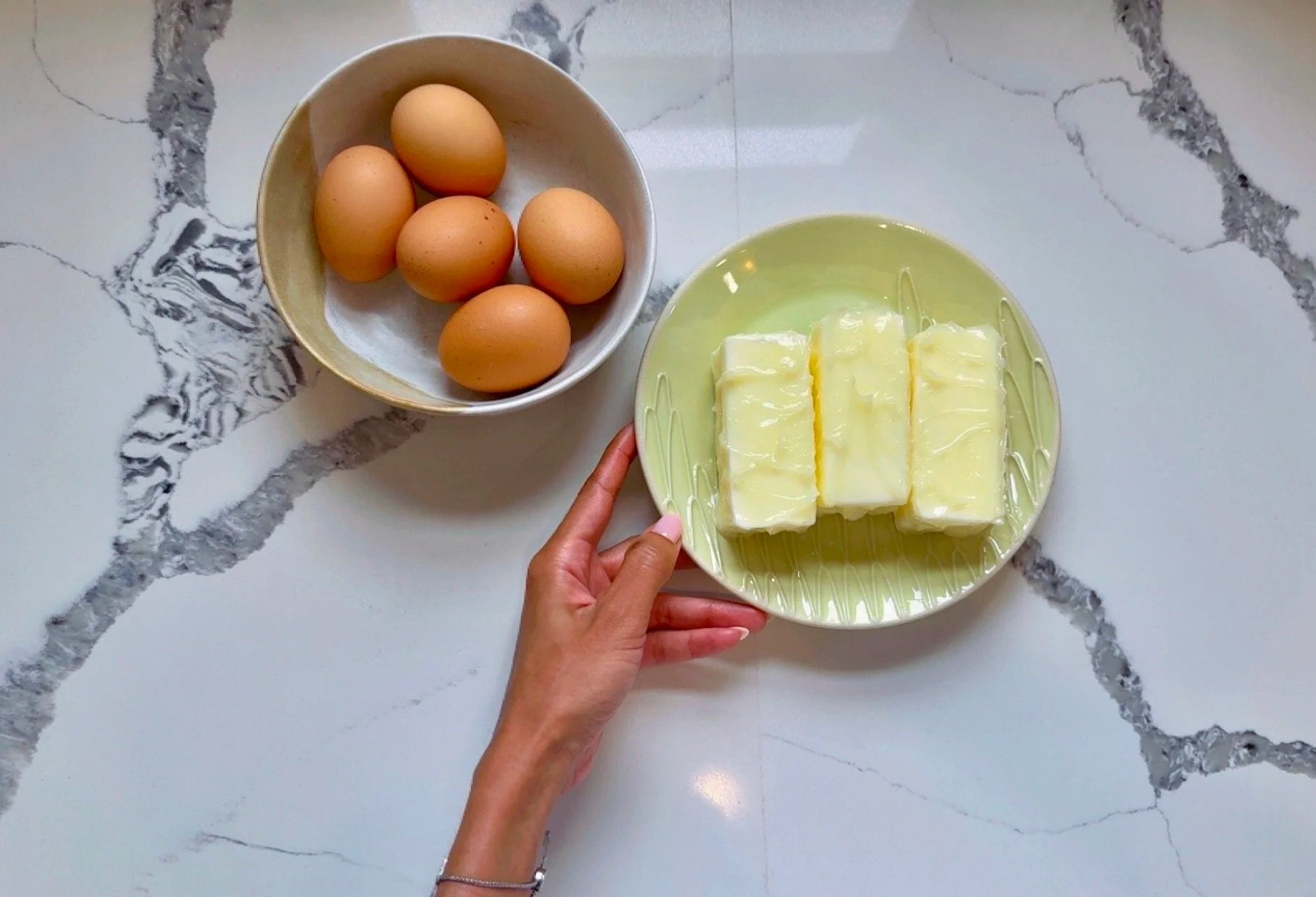
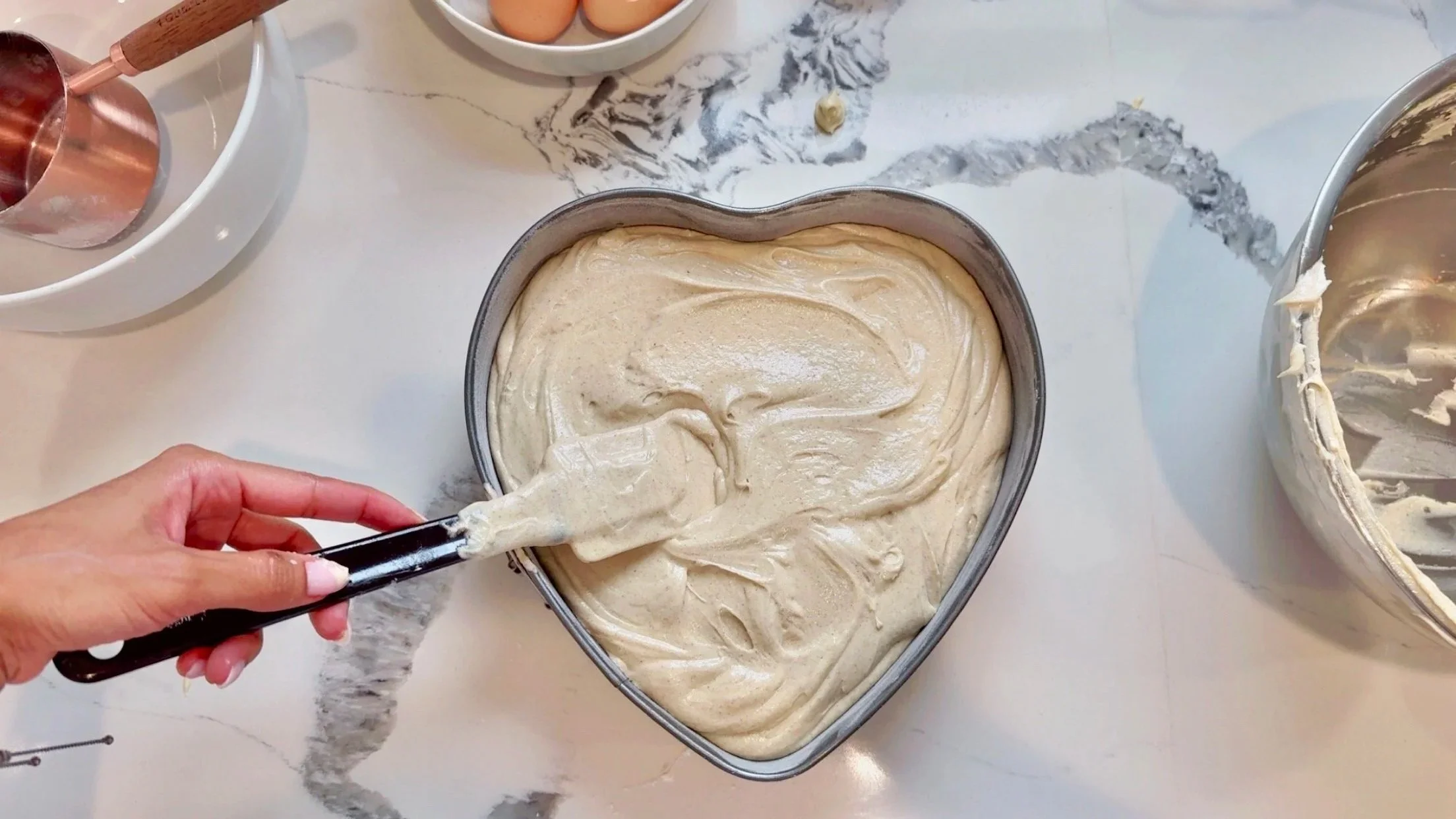
I used a springform pan, baked a classic pound cake, and carved the heart freehand into the center while still warm. There was something satisfying about that — no template, no stencil, just a knife and a decision. I hollowed it out deeply and spooned every last bit of the jam into the cavity while still glistening and barely set. A light snowfall of powdered monkfruit over the top. No frosting, no cream. Just the golden crumb and that deep red center. I brought the cake to my aunt's house since that felt like the right place for it.
I've been thinking about what it means to cook carefully for someone who will never taste it. They won't say it's good, won't ask for the recipe, and still you want it to be right. Still you spend three days on the jam. You still care about the monkfruit, the freehand heart. Love doesn't require a recipient to be present. You aren't cooking to get something back. You’re just loving someone and cooking is how it comes out.
✦ ✦ ✦
I love you, Grandmother, happy birthday <3 The cake was for you. I made it as carefully as I could.